Reform at this depth cannot be compressed into a political cycle. Trust rebuilds on a 2-5 year lag behind demonstrated delivery. Embedded teams need 6-12 months to ship. The sequencing matters as much as the components.
First 90 days: visible wins
Trust rebuilds on delivery, and delivery needs a down payment. Five moves ship inside the first ninety days, all cheap, all fast, all public — the same five the route to adoption hands to the decision-makers:
- A live public status page for national clinical systems — uptime and incidents, published as they happen.
- Transcript-fidelity board minutes from the next meeting onward, before statute compels them.
- The full contract register above £100K, published — including values never before stated in a public forum.
- The independent digital expert named publicly, with their reports published.
- One clinician-visible fix per health board, chosen by the boards’ clinicians, shipped by the future embedded teams working in pilot form.
The 36 months
Three decision points anchor the timeline. Month 6: leadership-change decisions at Digital Health and Care Wales (DHCW) are made on the forensic review’s findings. Month 12: the transparency dashboard goes live under statutory publication; the first patient-safety triage outputs are published. Month 18: the first health board reports either “DHCW delivered what they promised” — the single most important signal — or the reform escalates to the next intervention tier.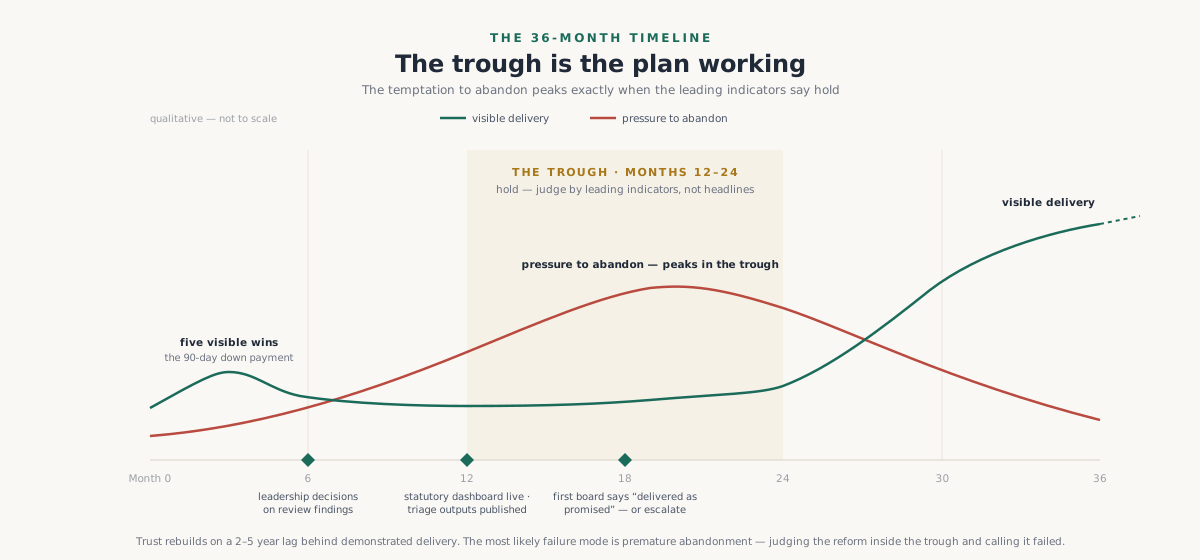
Welsh Government commissions independent forensic review. Patient safety triage of live national systems and shared infrastructure (WPAS, eMPI, WCCG, WICIS, RISP, PSBA-class infrastructure, and the data-centre estate); systems pause where the safety case is unsupported. Audit Wales mandates data publication. Protected staff reporting channel established. Transparency dashboard designed, ready for deployment once the review creates conditions for its use. In parallel: Senedd Public Accounts Committee opens the Reform-the-Funder workstream — RAG audit trail, capital-and-revenue coherence rules, remit-letter discipline.
Forensic review findings delivered. Independent skills audits of all executive/director roles completed. Non-executive board audit complete; sub-committees reconstituted with technical NEDs against published competency criteria. Leadership change decisions made based on review findings.
New leadership appointed. The board that produced the culture record cannot itself remediate the conditions producing the harm; the non-executive cohort is reconstituted alongside the executive, and the prerequisite culture conditions for digital delivery (psychological safety, trust, the ability to surface bad news) become explicit acceptance criteria for the reset. Transparency dashboard launched under statutory publication. Independent panel selects 3 priority programmes against patient-safety-weighted criteria; published 24-month stop list. Vendor portfolio audit complete; sole-bidder contracts above £1M re-tendered or terminated. Two pilot health boards selected; embedded teams assembled with externally recruited team leads. Multi-year programme funding negotiations begin under Reform-the-Funder terms.
Focused programmes delivering to clinical users. Embedded teams shipping working software. Culture shifting as staff see real delivery metrics. Genuine post-mortems on WCCIS, OpenEyes, LIMS, RISP, WICIS, and WCCG completed and published. Trust recovery begins — the earliest it can start. This is the trough phase: short-term political pressure is maximum, visible delivery is minimum; the temptation to abandon the reform is strongest exactly when leading indicators say to hold. Trust rebuilds on a 2-5 year lag behind demonstrated delivery.
Embedded model spreading to additional health boards. Portfolio cautiously expanding based on proven demand. L2: Credibility Spiral showing signs of reversal. Organisation identity transitioning from "national IT department" to standards-and-interoperability body — the architectural endpoint of Flip the Model. Health boards procure clinical applications within national standards; the standards body holds the patient index, interoperability backbone, and shared cybersecurity.