The name Digital Health and Care Wales (DHCW) promises health and care. The record delivers neither at the boundary: WCCIS — the community and social care system — consumed £42M+ over eleven years and was rebranded rather than finished, and the Royal Colleges' testimony about patients deteriorating "when they move between systems" describes precisely the journeys that cross from hospital to GP to community to council care. This chapter is the blueprint for the boundary.
Primary care
GP practices in Wales run on a small set of nationally managed systems. The Digital Blueprint for NHS Wales sets one rule here: GP systems are layer-5 applications like any other — procured within national standards, connected through the backbone, with GP record access via standard FHIR APIs rather than bespoke integrations. Where UK-wide services exist and work — GP Connect-class record access — Wales interoperates rather than duplicates: the Welsh Translation principle applied to primary care.
Community and the WCCIS lesson
WCCIS gets the genuine post-mortem before it gets a successor. The structural finding is already visible: one national system was asked to serve health boards and 22 local authorities with different statutory duties, different case-management models, and different funding — a platform where the architecture needed building blocks. The successor is not “WCCIS 2”. It is: a shared care-coordination record standard; an event stream (admission, discharge, package-of-care start and change) on the national backbone; and locally procured case-management systems that conform to both. Councils choose their tools; the data flows anyway. That is the federation principle doing its only job — making “systems that don’t talk to each other” a procurement impossibility rather than a daily clinical reality.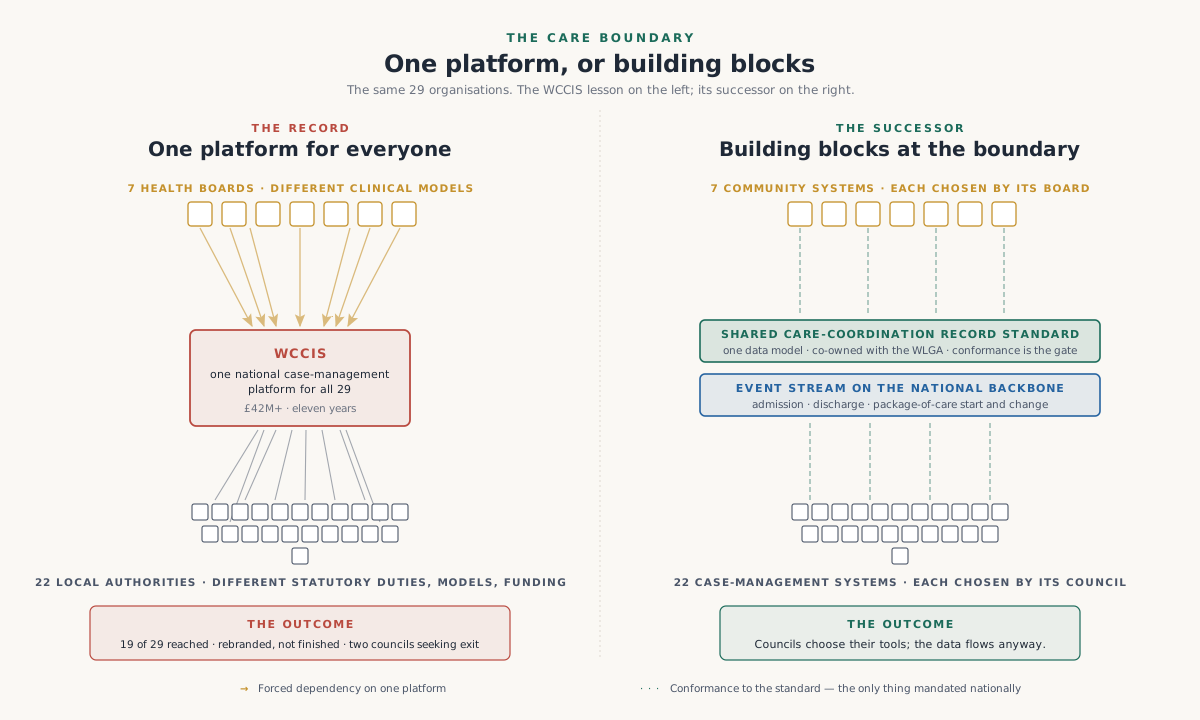
Social care data, governed properly
Health and social care data answer to different law and different sensitivities. The boundary is handled explicitly: a published national data-sharing agreement template between health boards and local authorities, building on the Wales Accord on the Sharing of Personal Information (WASPI); citizen visibility of cross-boundary access through the consent surface; and social care representation on the data access panel. Integration is a data-flow problem and a trust problem; the blueprint solves the first with the backbone and the second with transparency.
Who owns this chapter
Jointly, by design: the standards body owns the standards and the event backbone; health boards own their community services; local government owns social care systems, with the WLGA co-owning the record standard. The funding follows the multi-year envelope model, with a care-boundary programme as one of the priority three candidates for the independent panel to weigh — because on patient-safety-weighted criteria, the boundary is where the harm is.